


Bar stools for outdoor islands by height and style
A 29-inch stool is usually bar height, not the natural fit for a standard kitchen island. The right height matters: too little room beneath the counter can make an otherwise beautiful outdoor seating area feel cramped.
It’s easy to focus on style first, especially when wicker, rattan, and metal each bring a distinct look to an outdoor retreat. With bar stools for outdoor islands, start by matching seat height to the island: bar stools typically have seats 28 to 30 inches high, while a comfortable setup leaves 10 to 12 inches between the seat and counter. This guide explains when a 29-inch seat works, how to assess outdoor materials, and what sets woven styles apart from metal, so you can choose seating that feels considered as well as inviting.
Table of Contents
Is a 29 inch stool counter height or bar height?
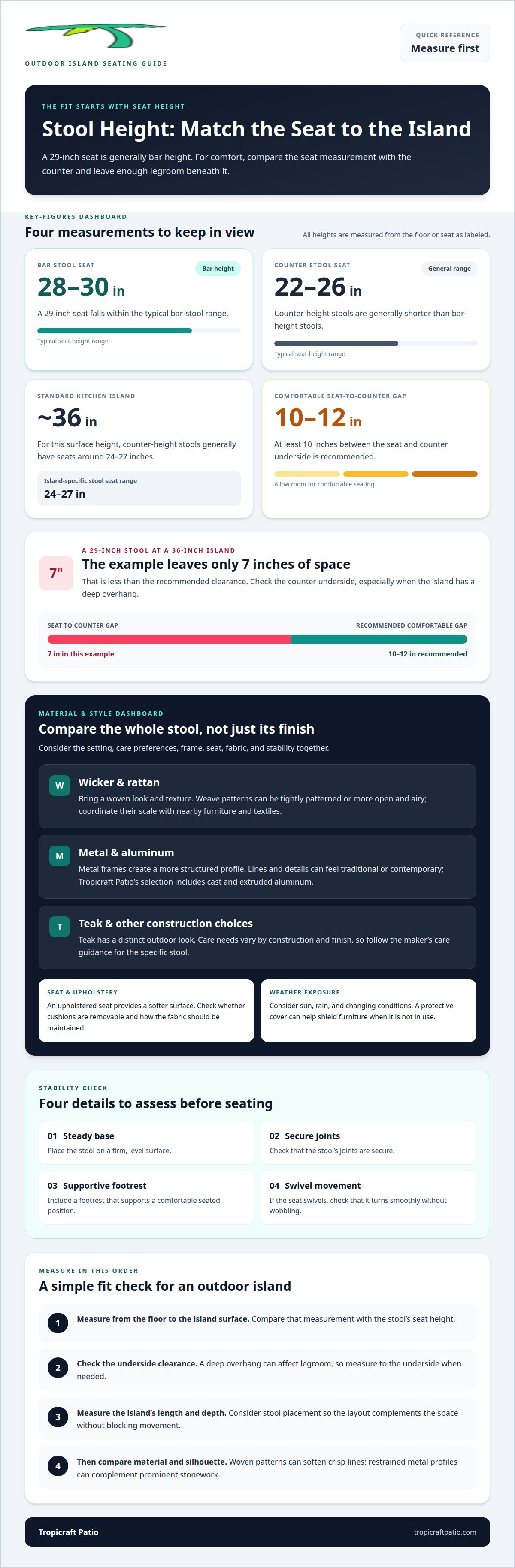
A 29-inch seat is generally bar height, not counter height. Bar stools typically measure 28 to 30 inches from floor to seat, while counter stools usually measure 22 to 26 inches. That distinction helps match the stool to the counter and avoid a cramped seating position.
A standard kitchen island is about 36 inches high. Counter-height stools for these islands generally have seats around 24 to 27 inches high. Measure from the floor to the island surface, then compare that height with the stool’s seat measurement. For example, a 29-inch stool at a 36-inch island leaves only 7 inches between seat and counter, which is less than the recommended clearance.
A comfortable bar-height setup allows 10 to 12 inches between the stool seat and counter. At least 10 inches between the seat and the counter’s underside is recommended. Measure to the underside if the island has a deep overhang, since that space determines whether your legs fit comfortably. Also measure the island’s length and depth before selecting chairs, so the stools complement the layout without blocking movement.
Choose seat height to suit the surface, not just the stool’s finish or style. For a standard counter-height island, look for counter-height stools; bar-height seating is designed for a taller surface. Taking this measurement first makes it easier to choose bar stools for outdoor islands.
Are swivel bar stools suitable for outdoor islands? Yes. They make it easier to turn between the island and nearby conversation without moving the stool. Choose a swivel design with a seat height that fits the counter, and leave room for it to turn.
What material is best for a bar stool?
The right stool depends on the island’s exposure, the care you’re prepared to provide, and the look you want beside an outdoor kitchen. Compare the frame, seat, fabric, and stability as parts of the whole piece.
Outdoor Materials and Weather Resistance
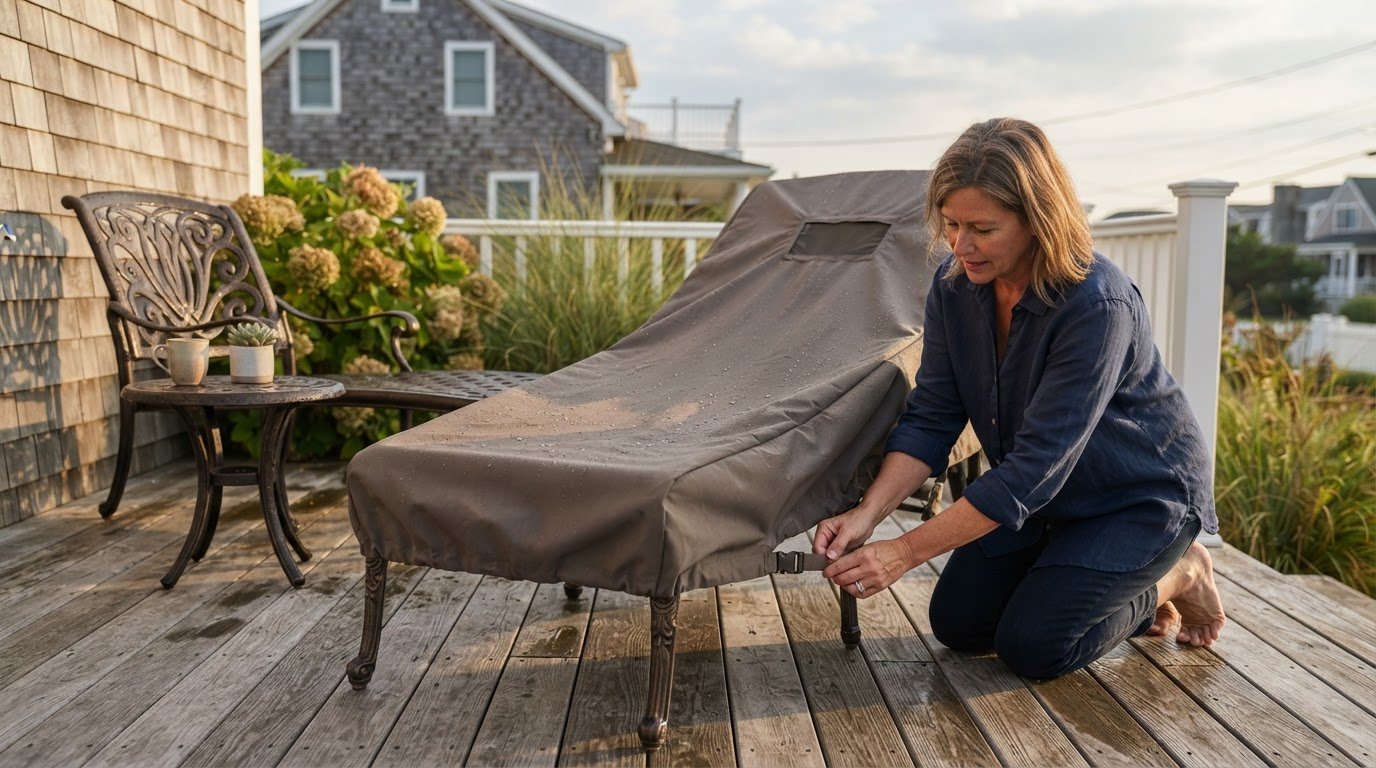
For an exposed patio, consider how sun, rain, and changing conditions may affect the stool’s materials and finish. Aluminum, teak, and resin wicker each bring a distinct outdoor look, while care needs vary by construction and finish. Follow the maker’s care guidance for the specific stool rather than assuming all materials need the same routine. A protective cover can help shield furniture when it is not in use.
Frame, Seat, and Upholstery Materials
Consider the frame and seat separately. An aluminum frame with a woven seat, for example, feels different from a solid teak stool. For breakfast or dining areas, an upholstered seat provides a softer surface, while fabric influences both appearance and care. Before choosing, check whether cushions are removable and how the maker recommends maintaining the fabric.
Material Styles and Stool Stability
Resin wicker adds woven texture, while metal frames create a cleaner, more structured profile. A swivel stool makes it easier to turn toward guests, and an adjustable design can suit spaces where seating height needs flexibility. Neither feature is right for every island, so match the style and function to your setting.
What safety and stability features matter for outdoor bar stools? Look for a steady base, secure joints, and a supportive footrest. Place the stool on a firm, level surface, and check that a swivel seat turns smoothly without wobbling.
For help considering materials alongside your outdoor dining space, talk through your stool choices.
Wicker, rattan, and metal stool styles
Style affects how an island fits into the rest of an outdoor room. Compare the stool’s pattern, silhouette, and finish with the overall setting.
Wicker Stool Styles
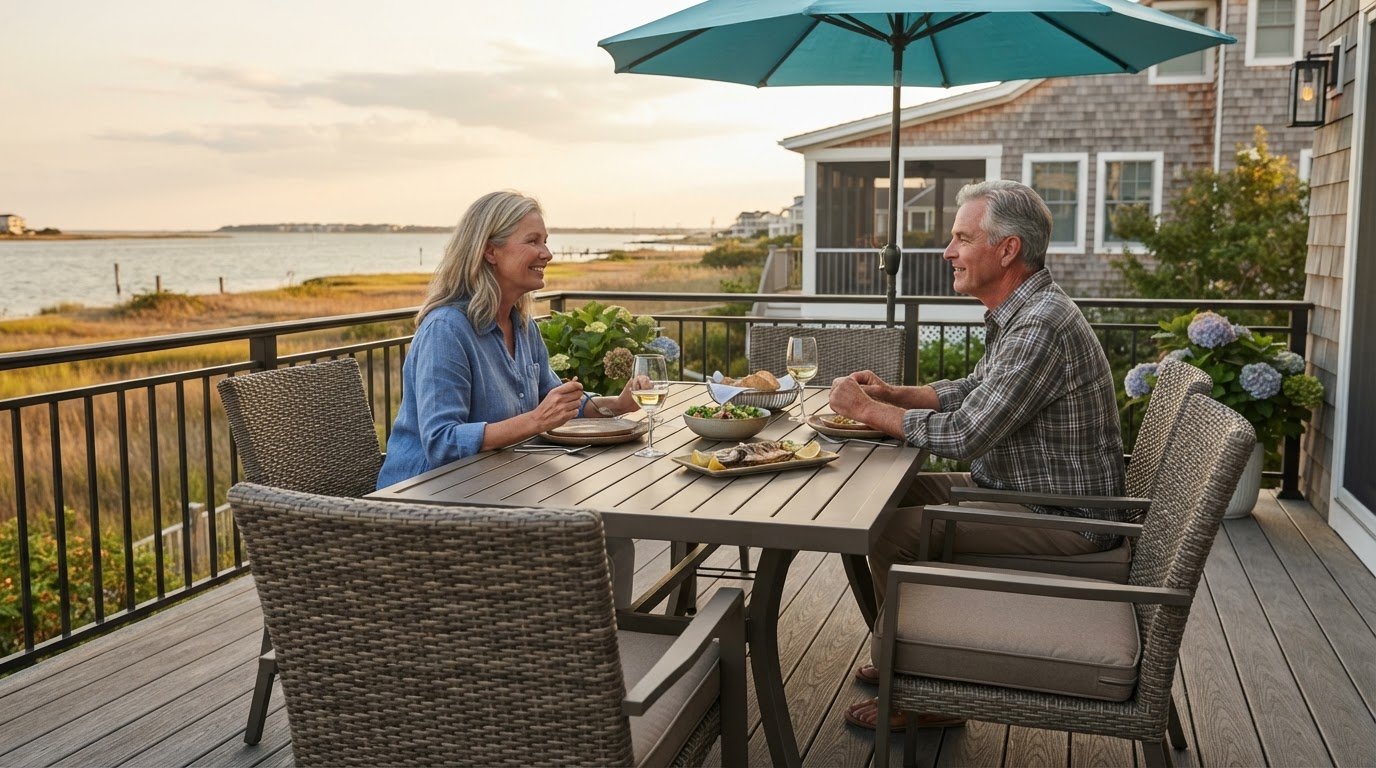
Wicker and rattan designs can range from tightly patterned surfaces to more open, airy details. Consider how the weave scale relates to nearby furniture: a fine pattern can feel understated, while a more pronounced one can become a visual focal point. For bar stools for outdoor islands, coordinate woven details with cushions or other textiles, and explore rattan and wicker outdoor seating for design inspiration.
Metal Stool Styles
Metal stools can look traditional or contemporary depending on their lines and decorative details. Curved backs and ornamental accents create a different effect from simple, straight profiles. Decide whether the stool should echo the island’s shape or provide contrast. Repeating a finish in nearby lighting or hardware can help the seating feel like a considered part of the design.
For a cohesive arrangement, consider stools alongside the entire outdoor setting rather than as isolated pieces. Patterned woven designs can soften crisp architectural lines, while a restrained metal silhouette can complement an island with prominent stonework. Mixing materials also works when a shared color or repeated detail ties them together. Choose a style that supports the atmosphere you want, from a quiet retreat to a polished gathering place, and use the surrounding pieces to guide your decision.
Tropicraft Patio
Tropicraft Patio can help you connect stool style and material with the outdoor island you’re furnishing. If you’re weighing a woven look against a more defined metal frame, its outdoor selection includes resin wicker, cast aluminum, and extruded aluminum. Consider how each option complements your island, surrounding seating, and the atmosphere you want to create, from a relaxed breakfast spot to an elegant setting for evening conversation.
Bring your priorities into the decision: the island’s measured height, preferred style, and how exposed the seating area is to the elements. These details help narrow the material and design direction without losing sight of comfort or the overall patio setting. For a considered next step, contact Tropicraft Patio.
Shape an outdoor setting that feels like yours
The right seating can help an outdoor island feel naturally connected to the rest of your patio. As you refine your plans, consider the mood you want to create and how the materials will sit alongside your existing furniture, finishes, and landscape. Tropicraft Patio offers resin wicker, cast aluminum, and extruded aluminum, giving you distinct material directions to consider for your space. Let the island’s role guide the final choice: a relaxed breakfast nook may call for a different look than a gathering place for evening conversation. Thoughtful coordination makes the seating feel like part of a personal retreat, not an afterthought. Ready to explore possibilities for your setting? Connect with Tropicraft Patio and take the next step toward outdoor comfort that feels considered and inviting.
Frequently Asked Questions
How do you know what size bar stool you need?
Use both the island’s dimensions and the stool’s full footprint, not just its seat measurement. Check seat depth, armrests, backrest shape, and whether the stool swivels, as each affects fit and movement. If possible, mark the stool’s footprint on the patio with removable tape. This helps you see whether guests can sit, turn, and pass through without disrupting the layout.
What is normal bar stool seat height?
A standard bar stool is designed for a raised bar surface rather than a standard counter. Product listings may distinguish seat height from overall stool height, so focus on the measurement from the floor to the top of the seat. For a stool with a cushion, confirm whether the listed seat height includes it, since that changes the finished seating position.
What materials are best for outdoor island bar stools in different climates?
Choose materials with your specific exposure and care routine in mind. In coastal areas such as Ventnor, Margate, Stone Harbor, Avalon, and Cape May, consider how salt air and moisture may affect finishes, and follow the maker’s cleaning guidance. On a sunny patio, consider whether the stool will be in direct light or under shade. A protective cover can also help shield seating when it is not in use.
What seat height should outdoor bar stools be for a kitchen island?
Choose stools suited to the height of your island’s surface, then consider how you like to sit. A supportive back and footrest can make longer meals more comfortable, while armless stools may tuck more easily beneath an overhang. If the island has a raised section, measure that seating area separately rather than assuming every surface is the same height.
How do I measure an outdoor island for the right bar stool height and spacing?
Measure the island’s seating edge and note any supports, cabinets, or corners that could limit legroom or stool placement. Mark the intended stool positions with removable tape, allowing for armrests and swivel movement when planning neighboring seats. Check the path from the patio door or dining area, too. This layout test can reveal crowding before you choose a stool style.
Comments