


Creating Ambiance With Patio Lighting for a Softer Glow
The quickest way to soften a patio isn’t to add more brightness. Choose warm light and layer it at different heights. Creating ambiance with patio lighting starts with a gentle overhead glow or string lights, then adds intimacy with lanterns or flameless candles near the seating.
A well-lit patio feels inviting without washing out the textures that make it yours. Warm white light generally suits relaxed gatherings, while brighter, cooler illumination is better reserved for practical visibility.
This guide explores quick lighting combinations, simple ways to use lanterns and flameless candles, and how to match light color with materials such as teak, aluminum, resin wicker, and stone. The key is balance: let the light complement the patio’s surfaces rather than compete with them. The result is a softer, more considered setting that feels cohesive from the first evening glow through a late-night conversation.
Table of Contents
1. Which outdoor lighting types create the best ambiance fast?
Start with dimmable lights, which let you shift from dinner brightness to a softer evening glow. For a relaxed setting, choose warm white bulbs in the 2200K to 2700K range. Layer a pendant or string lights overhead with table-level lanterns and low pathway fixtures. This mix adds depth at different heights, making an outdoor space feel inviting without relying on one harsh source. Solar lights suit sunny spots without nearby outlets, while battery-powered lights offer flexible placement. Hardwired fixtures work well for permanent lighting plans.
Place string lights above seating, across a pergola, or along a railing to define the gathering area. Set lanterns on dining tables or beside lounge chairs, and position sconces on patio walls near entrances. Around an outdoor fireplace, matching sconces or compact up-and-down fixtures can frame the feature; place them at equal heights on adjacent walls or columns, away from the fire. These simple steps create a balanced effect.
There isn’t one useful lumen target for every patio. Choose light output based on the area’s size and whether you’re illuminating dining, walkways, or plants. For example, use focused light over a dining table and lower-level fixtures to guide movement. Reserve brighter, cooler light for visibility rather than the main seating area.
To reduce glare and light spilling beyond the patio, dim fixtures, aim directional beams downward, and keep exposed bulbs out of eye level. Use outdoor-rated fixtures where needed, and carry indoor design details outdoors with a coordinated pendant shape, shaded lamp, or repeated finish. For instance, matching black sconces with a dark metal table can make the lighting feel intentional while keeping the atmosphere soft.
2. Lanterns and flameless candles for ambient glow
Lanterns add both light and decoration, especially beside a lounge chair or on a dining table. Cluster them at different heights near seating to create a gentle focal point. For a simple arrangement, place a larger lantern on the ground and a smaller one on a side table. Pillar candles in tall glass hurricane lanterns create a sheltered glow, while flameless LED candles provide a candlelike effect without a real flame. Keep traditional candles away from flammable materials and never leave them unattended.
For an intimate evening, pair lanterns with string lights above the garden seating area. Keep lanterns low beside chairs so their glow adds comfort without competing with overhead light. At dinner, place one or two on the table to illuminate place settings without shining directly into guests’ eyes. This creates a softer setting than relying on a bright fixture alone.
Patterned lanterns add interest after dark. Geometric or nature-inspired cutouts cast decorative shapes on a nearby wall, turning it into a subtle focal point. For a touch of color, pair warm lantern light with a restrained accent from smart color-changing lights, keeping the lanterns as the softer visual anchor.
Above a dining table, a decorative outdoor chandelier or pendant can provide overhead definition; lanterns below add a more intimate layer. Paper lanterns can make a party feel festive, but shouldn’t remain exposed to the elements for long. For a tailored arrangement around your seating and dinner space, discuss your patio lighting plan.
3. Matching light color to patio materials
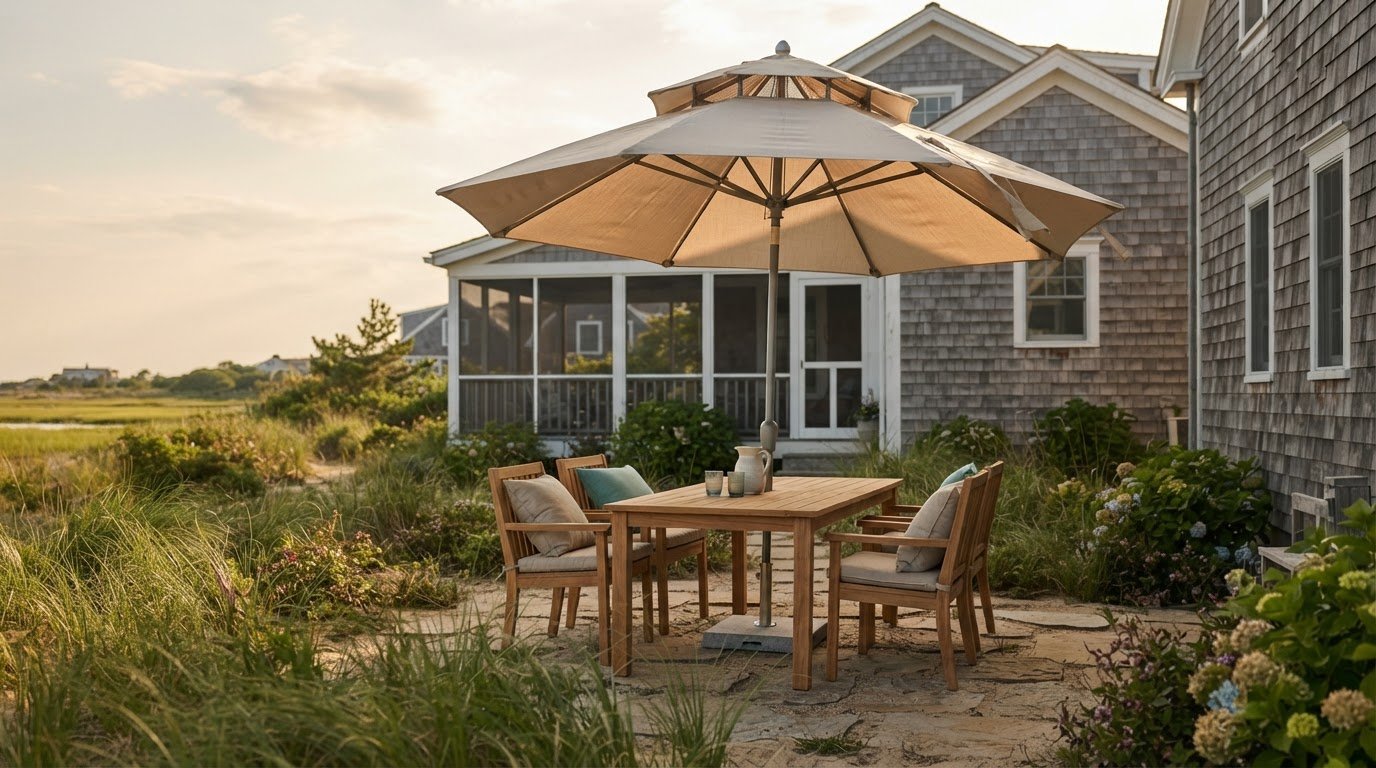
Matching light color to patio materials is central to creating ambiance with patio lighting. Warm white light in the 2200K to 2700K range creates a relaxing atmosphere across teak, stone, and woven textures. On a teak dining set, it can emphasize the wood’s natural warmth; near pale stone, it creates a softer contrast than bright, cool light. Use the same warm tone around the main seating area for a cohesive effect.
Metal finishes also benefit from thoughtful contrast. Warm light can soften the crisp lines of aluminum furniture, while a restrained accent near a dark frame highlights its shape without making the whole patio feel bright. For a column or textured wall, test warm-white uplighting before installing fixtures permanently. Aim the beam at the surface, not the seats, to reveal the detail while keeping the seating area functional.
For a layered plan, reserve warm light for dining and lounging, then use a subtle cool accent around a specimen plant or architectural feature. A color temperature around 3500K can provide that gentle distinction. Keep stronger, blue-white security light separate from relaxing areas. The principle behind creating ambiance with patio lighting is to coordinate the dominant light with the largest visible material, then add contrast sparingly.
Patio lighting costs depend on the fixtures you choose, how many areas need illumination, and whether installation requires new wiring. A portable setup differs from one with hardwired fixtures, so the layout and installation needs determine the total.
To refine a lighting plan around your patio’s surfaces and finishes, discuss your patio design.
Tropicraft Patio: Lighting
Tropicraft Patio offers lighting to help bring a considered glow to an outdoor retreat. If you’re refining a patio around resin wicker, cast aluminum, or extruded aluminum seating, explore the outdoor furniture lines that can complement your lighting choices. Fixture style and light color can help coordinate furnishings and atmosphere into a cohesive setting.
Think about the mood you want in dining and lounge areas, then coordinate the lighting with your furniture finishes and how you use the space. Thoughtful choices can make an outdoor setting feel calm and welcoming after dusk.
Contact Tropicraft Patio to discuss your patio lighting and furniture choices.
Shape a patio that feels like your own retreat
Let your patio lighting evolve with the way you use the space. A dining area may call for a different atmosphere than a quiet reading corner, so leave room to adjust the setting over time. Creating ambiance with patio lighting is less about following a fixed formula and more about choosing details that feel personal and cohesive.
Tropicraft Patio offers resin wicker, cast aluminum, and extruded aluminum, giving you distinct furniture materials to consider as you refine your outdoor setting. When you’re ready to explore how your patio’s furnishings and lighting can work together, contact Tropicraft Patio today. Take the next step toward an outdoor space that welcomes you into the evening.
Frequently Asked Questions
Which outdoor lighting types create the best ambiance fast?
For a quick change, add a portable floor lamp beside a lounge chair or aim a solar spotlight at a favorite plant. These choices define a reading spot or garden feature without changing the whole lighting layout. On a small patio, start with one focal point and add more only if other areas feel dark.
Any budget-friendly DIY lighting ideas I can try tonight?
Place battery-powered fairy lights in clean Mason jars, then set them on a table or hang them from a sturdy branch. Keep the battery pack accessible for easy switching. For a gathering, arrange jars at different heights on a stable surface, away from walkways where guests could knock them over.
How can lighting set different moods for my patio nights?
Create separate lighting zones for different activities. Brighter light around the dining table helps guests see their food, while a dimmer lounge corner suits conversation or stargazing. Smart lights can shift color or follow a schedule, creating one setting for dinner and a quieter one later.
How do I plan and install patio lighting the right way?
Sketch the patio’s seating, dining, steps, and garden features before choosing fixture locations. Mark which areas need task lighting, safe movement, or visual emphasis, then plan how each source will be powered. For hardwired fixtures, use a licensed electrician and account for local electrical codes rather than attempting wiring yourself.
How do you choose a color for an outdoor light fixture?
Choose a fixture finish that relates to visible patio details, such as furniture frames, railings, or door hardware. Black is a versatile classic for both traditional and contemporary settings. For a quieter look, repeat an existing finish. For a deliberate accent, choose a contrasting color that appears elsewhere in the outdoor space.
Comments