


Custom cushions for odd-shaped chairs and seats
What if the seat’s rounded corners are part of what makes it comfortable, not a flaw to work around? A replacement cushion can be shaped to follow the chair’s outline, including rounded corners, curved edges, angled sides, and other nonstandard forms. Custom cushions for odd-shaped chairs can preserve the seat’s distinctive shape while creating a tailored look.
A precise fit starts with a clear design and accurate measurements. The cushion should follow the seat’s shape, while its thickness and fabric help determine how it looks and feels in your outdoor space.
This guide explains how to choose a cushion shape, communicate your design, and measure the seating area. You’ll also learn which details help a professional understand the fit you want, so the finished cushion feels comfortable and well suited to your outdoor setting.
Table of Contents
Can I provide my own design for a custom cushion shape?
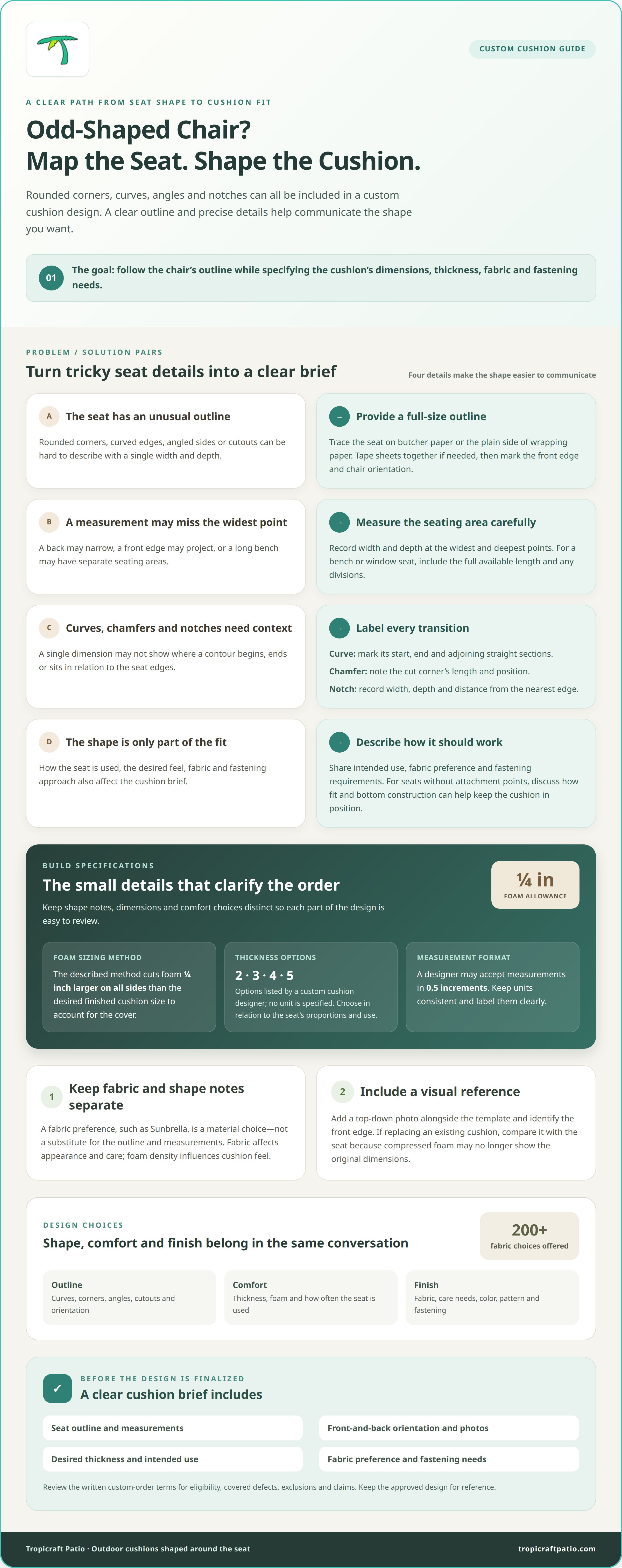
Yes. Give the professional a drawing or template showing the seat outline, rounded corners, cutouts, and desired finished thickness. Make a paper template from butcher paper or the plain side of wrapping paper, taping sheets together if needed. Label the front edge and mark the chair’s orientation so the shape is clear.
For an irregular cushion, the professional uses the outline to cut foam to match the seat. The specified method cuts foam 1/4 inch larger on all sides than the desired finished cushion size. This allowance helps account for the cover, so the foam-and-fabric combination follows the intended profile. An irregular cushion may need a cover pattern tailored to its shape.
Include the desired thickness in your design. A custom cushion designer lists thickness options of 2, 3, 4, and 5, without a unit attached to those options. The right choice depends on the seat’s proportions and how the cushion will be used. A low-profile square seat and a deeper, curved chair may call for different proportions. Discuss foam and insert choices with the professional, including how often the seat will be used.
DIY gives you hands-on control over the pattern and fabric, but cutting foam and fitting a cover around an unusual corner takes care. A professional can work from your template to shape the foam and cover together, helping reduce the risk of a mismatch.
To help create an accurate template, provide the outline, measurements, front-and-back orientation, desired thickness, and clear photos of the chair. Before ordering, review the written terms for custom-order eligibility, covered defects, exclusions, and claims. Keep the approved design for reference.
Measuring replacement cushions and furniture spaces
Accurate measurements help size a replacement cushion to the furniture, not just approximate its shape. Provide the dimensions, a clear outline, and details about the seat’s position.
Cushion Dimensions and Sizing
For a chair cushion, provide the seat’s width and depth, then note the desired finished thickness. Measure the seating area at its widest and deepest points, especially if the back narrows or the front edge projects. For a window seat or outdoor bench, include the full available length and any divisions between seating areas.
Share whether you’re replacing an existing cushion or measuring a bare frame. An old cushion can help show the intended profile, but compare it with the seat because compressed foam may no longer reflect the original dimensions. A custom cushion designer may accept measurements in 0.5 increments, so keep each measurement consistent and label the units clearly.
Measuring Curves, Chamfers, and Notches
For a curved edge, map the curve onto a template rather than relying on a single width. Mark where the curve begins and ends, and record the straight sections that meet it. For a chamfer, note the cut corner’s length and position. For a notch, include its width, depth, and distance from the nearest edge.
Provide a top-down photo alongside the outline and identify the front edge. If the template needs more room than one sheet, tape multiple sheets together. Note fabric preferences, such as Sunbrella, separately from shape details: pattern and material choice are separate decisions.
For outdoor cushions, a professional can use your measurements and template to define the finished dimensions around the seat’s curves and cutouts. If the outline has several transitions, discuss your cushion measurements so those details are part of the conversation.
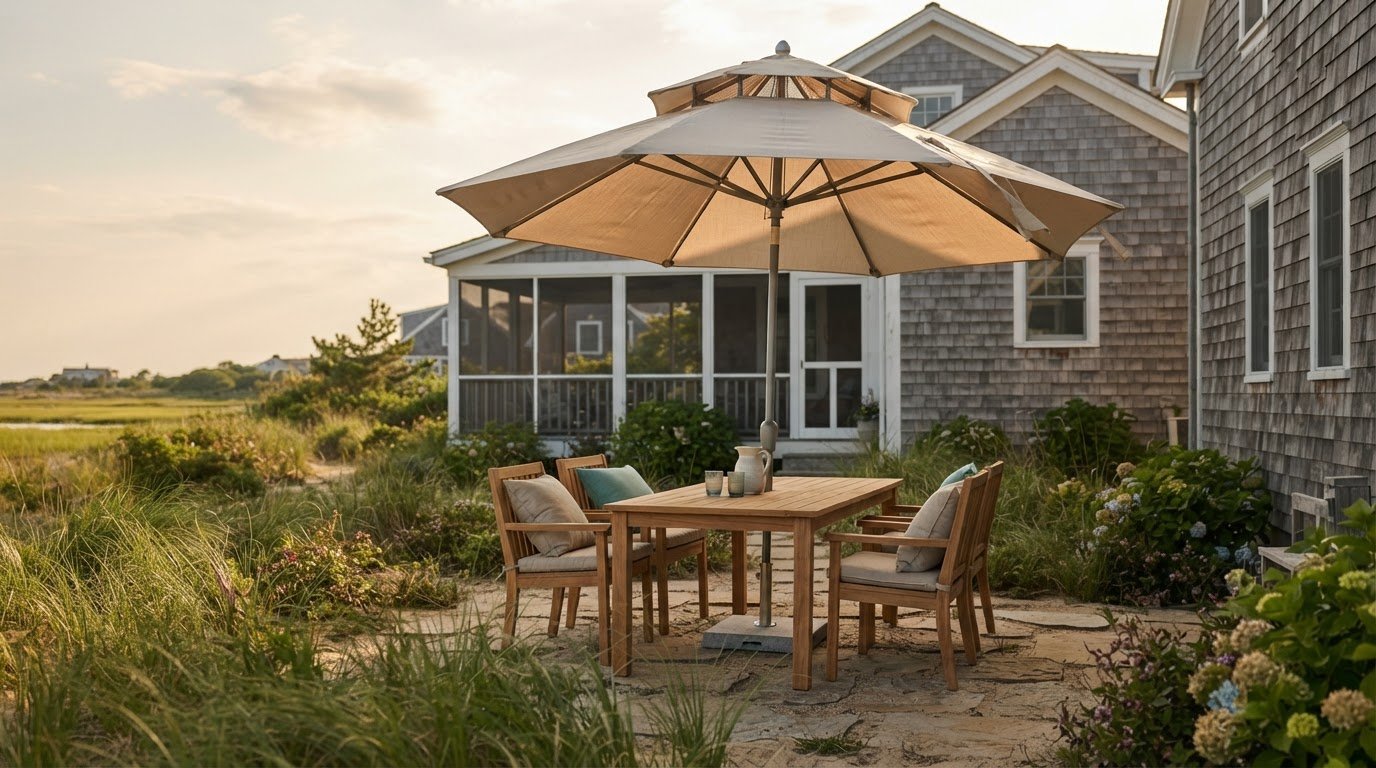
Custom-shaped chair and seat cushions
A tailored cushion can bring a curved chair, notched seat, or window seat into a cohesive outdoor setting. The strongest design balances the furniture’s silhouette with comfort, fabric, and a secure fit.
Fabric Durability and Stain Resistance
For custom cushions for odd-shaped chairs, choose fabric suited to the cushion’s location and use. An indoor reading chair may call for a soft hand, while outdoor seating benefits from fabric intended for outdoor conditions. Consider stain resistance, care requirements, and how the color and pattern complement the chair.
Fabric and foam density serve different purposes: fabric affects the cover’s appearance and care, while density influences the cushion’s feel. A window seat used for long periods may call for a different feel than an occasional accent chair.
Ordering Custom-Shaped Cushions
Work with a professional who can use your design and seating details. To make custom cushions for odd-shaped chairs, the maker needs to understand the intended use, fabric preference, and any fastening requirements as well as the shape. For example, show the changing contours of a curved chair with an angled back clearly in your drawing or template.
Making and shipping time depends on the design, selected materials, and delivery arrangements. Ties or another fastening approach can help secure a cushion, depending on the chair’s structure. For seats without attachment points, discuss how the cushion’s fit and bottom construction can help keep it in position. Discuss your custom cushion design to consider the shape, fabric, and fastening together.
Tropicraft Patio: Cushions & Pillows
Tropicraft Patio offers Cushions & Pillows to help create a comfortable, coordinated finish for outdoor seating. If you’re choosing cushions alongside a chair, its Resin Wicker, Cast Aluminum, and Extruded Aluminum furniture offers durable options for outdoor settings. Custom designs can be tailored with over 200 fabric choices to suit your style and outdoor setting.
Bring your chair’s outline, measurements, and preferred fabric direction into the conversation. These details help clarify the shape and look you want, whether you’re refreshing one seat or bringing a patio arrangement together. Fabric choice matters visually, too: consider how its color and pattern will sit beside the furniture and within your outdoor space.
For a personal conversation about your cushion plans, contact Tropicraft Patio.
Make the Seat Part of Your Outdoor Vision
Treat the cushion as part of the patio design, not an afterthought. When its color and texture complement the chair and surrounding finishes, custom cushions for odd-shaped chairs can feel at home in the space. Choose a quiet, tonal look or a deliberate contrast to create the atmosphere you want.
Consider how the finished seat relates to nearby furnishings, whether your setting features Resin Wicker, Cast Aluminum, or Extruded Aluminum. Each offers a distinct visual context for selecting cushion fabric and profile. The goal is a personal retreat where the seating feels considered and inviting.
With a design direction in mind, consider how the cushion can complement the setting without overwhelming the chair’s distinctive shape. Contact Tropicraft Patio about your cushion plans and take the next step toward a more personal outdoor space.
Frequently Asked Questions
Can I order rounded corners?
Yes. When choosing the corner profile, consider the chair’s style and how the cushion will sit beside neighboring seats. A softly curved profile can complement a rounded frame, while a subtle corner treatment may suit a more angular chair. Fabric pattern also affects how prominent the shape looks, especially with patterned or directional designs.
What shapes can you make?
A custom cushion can follow an asymmetric outline, including a cutout around a chair post or arm. First consider whether the frame leaves enough room for the cushion to lie flat. A professional can use the seat’s structure to determine where the cushion needs clearance and where its edge should meet the frame.
What thickness should I choose for cushions?
Consider how the cushion will relate to nearby furniture before settling on a profile. For a dining chair, account for the space between the seat and table so the cushion doesn’t make sitting feel cramped. On a lounge chair, consider the seat height and the support you want. The frame’s proportions can guide the final choice.
How much do custom-shaped chair cushions cost in the United States?
Custom cushion pricing depends on the design and materials, so a single price won’t apply to every project. A simple seat pad and a cover with a complex contour require different work. Dimensions, fabric, foam choice, and construction details all affect an estimate. Share these details to receive pricing for the cushion you have in mind.
What foam types and thicknesses are best for custom chair cushions?
For occasional use, standard foam may be suitable. The best thickness depends on the chair’s proportions and the support you want. A rarely used accent chair has different needs from a chair used for daily meals. Consider how often the cushion will be used, then choose foam and thickness to suit its role.

Comments