


Ergonomic outdoor seating for easier standing and comfort
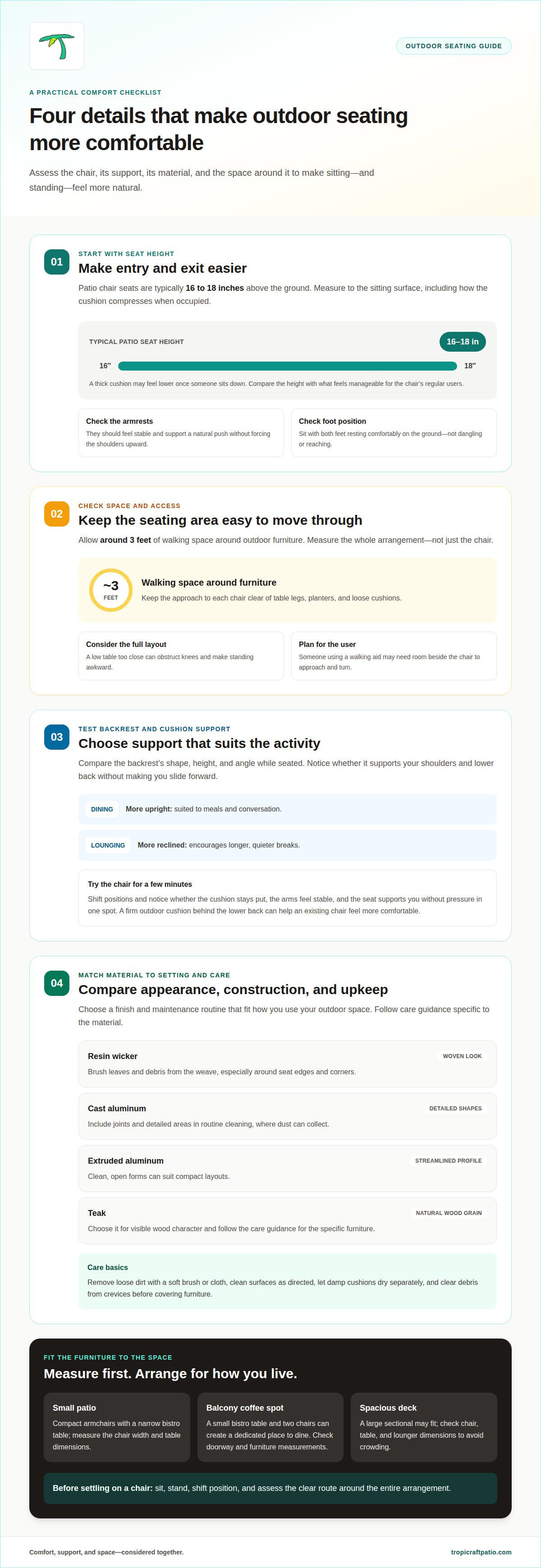
A chair can look inviting and still make standing feel like a chore. For ergonomic outdoor seating, seat height matters: patio chairs are typically 16 to 18 inches above the ground for comfortable sitting and easier entry and exit. Leave room to move, too, so the seating feels relaxed rather than crowded.
Comfort depends on more than a soft cushion. The seat’s height, a supportive backrest, and a material suited to your outdoor space all shape how enjoyable a chair feels through a long meal or an unhurried afternoon.
In this guide, you’ll learn how to assess these details, compare popular outdoor materials, and match seating to your space. A practical starting point is to consider the chair’s dimensions and allow around 3 feet of walking space around outdoor furniture.
Table of Contents
Outdoor seating materials and maintenance
For a small patio, consider compact armchairs with a narrow bistro table. Measure the chair width and table dimensions, then check that the layout leaves enough room for the seating you need.
Material affects appearance, care, and how furniture fits its setting. Compare the finish and construction, then choose a maintenance routine you can keep up with through the seasons. Resin wicker offers a woven look, aluminum a clean profile, and teak natural wood character.
Resin wicker: Brush leaves and debris from the weave, especially around seat edges and corners.
Cast aluminum: Include joints and detailed areas in routine cleaning, since their shapes can collect dust.
Extruded aluminum: Its streamlined forms can suit compact layouts with a clean, open appearance.
Teak: Choose it for visible wood grain, and follow the care guidance for the specific furniture.
Follow care instructions specific to the material. Remove loose dirt with a soft brush or cloth, and clean surfaces as directed rather than applying the same treatment to every finish. Let damp cushions dry separately, and clear debris from crevices before covering the furniture. A fitted protective cover can help limit exposure to dirt and weather between uses.
For a balcony used for morning coffee, a small bistro table and two chairs can create a dedicated spot to dine. Measure the doorway and furniture before choosing pieces, so they fit the available space and your intended use.
A spacious deck may accommodate a large sectional, while a small balcony may suit compact furniture such as a bistro set. Check chair, table, and lounger dimensions before arranging them to avoid crowding.
Accessibility and ease of standing
Seat height can change how easily a chair feels to enter and leave. Patio chair seats are typically 16 to 18 inches above the ground for comfortable sitting and easier entry and exit. Measure from the ground to the sitting surface, including the cushion as it compresses. A thick cushion can make a chair feel lower once someone sits down.
Armrests give you a place to push when standing. Check that they’re easy to reach and feel stable, then try sitting down and rising. A low table positioned too close can obstruct your knees or make standing awkward, so assess the entire seating arrangement.
Measure the seat: Compare the chair’s height with the height that feels manageable for its regular users.
Test the arms: Confirm the armrests support a natural push without forcing shoulders upward.
Assess the feet: Sit with both feet resting comfortably on the ground, rather than dangling or reaching.
Check the route: Keep the approach to the chair clear of table legs, planters, and loose cushions.
For example, a guest who uses a walking aid may need room beside the chair to approach and turn. A chair with arms can provide a steady handhold, while a seat that’s too low may make standing harder. Try the movement before arranging several chairs around a dining table.
Comfort is personal, so compare seat height, cushion depth, and arm position together. For help considering chair proportions for your patio, discuss your seating needs.
Backrest shape and reclining support
A backrest should meet your back comfortably without forcing an awkward posture. While seated, compare its shape, height, and angle.
Backrest Design
A gently contoured back may feel more supportive than a flat, rigid surface during a long conversation. Notice where the backrest meets your shoulders and lower back, and whether its angle lets you relax without sliding forward. An upright dining chair suits meals, while a reclined lounge chair encourages longer, quieter breaks.
Reclining support should feel controlled and stable. Test how the seat and backrest move together, and whether the position remains comfortable as you shift. A fixed-back chair can work well, too, if its angle suits activities such as reading or dining outdoors.
Features for Ergonomic Comfort
Comfort comes from how several features work together: a supportive backrest, suitable seat depth, stable armrests, and cushioning that doesn’t push you forward. Sit for a few minutes and change positions. Notice whether the cushion stays in place and the chair supports your back without creating pressure in one spot.
To make an existing chair more comfortable, add a firm outdoor cushion behind your lower back or replace a flattened seat cushion. Keep any extra pillow secure so it won’t slip when you lean back. A footrest can make a reclined seat feel more natural, provided it leaves a clear path around the chair.
Compare backrest angles and cushion placement in person, or get guidance on choosing comfortable outdoor seating.
Tropicraft Patio
Tropicraft Patio can help you consider outdoor seating materials and how they suit your space. Compare the woven look of resin wicker furniture with the structured appearance of cast or extruded aluminum, keeping your preferred chair proportions and backrest support in mind.
Seeing furniture in person makes it easier to judge its scale, finish, and feel. Consider how each piece will work with your patio layout and the activities you enjoy there.
For guidance on your outdoor seating needs, contact Tropicraft Patio.
Shape a More Comfortable Outdoor Retreat
Let how you use your patio guide your seating choice. A quiet reading corner, a dining area for shared meals, and a conversation space each need a different balance of support, movement, and style. Consider who uses the space most often, what they do there, and which details will make sitting down feel natural.
Thoughtful ergonomic outdoor seating can make your patio more inviting throughout the day while reflecting your personal style. Bring those priorities to your next furniture decision and choose pieces that feel right for your outdoor setting.
Plan your next seating choice with Tropicraft Patio, and bring a more comfortable outdoor retreat within reach.
Frequently Asked Questions
What are the best ergonomic outdoor chairs for back support?
Choose a chair that lets you change position while staying comfortably supported. During a trial, notice whether you can relax your shoulders, keep your upper body balanced, and shift without hitting a hard edge. Compare how the chair feels at a meal and during a longer pause, since each activity calls for a different posture.
How do you choose ergonomic patio seating for different body types?
If several people will use the furniture, have each person try the same chair rather than choosing by appearance alone. Check whether the seat and arms feel accessible and whether each person can settle comfortably without leaning or twisting. If one chair must serve several activities, prioritize the users and postures most common in your outdoor routine.
What seat height, depth, and back angle are recommended for outdoor chairs?
There’s no single combination that suits every body and activity. Try a chair with the table or footrest you’ll use alongside it, since these pairings affect the whole setup. A dining chair should let you sit naturally at the table; a lounge chair should support a relaxed position without making it difficult to stand.
How do ergonomic outdoor seating materials compare for comfort and durability?
Material alone doesn’t determine comfort. Frame shape, seat construction, and cushioning matter, too. Compare chairs in person by sitting near the center and edges, and notice whether the seat feels even and stable. For a shared patio, consider whether the finish and design suit both everyday meals and longer gatherings.
What maintenance and weatherproofing do outdoor ergonomic chairs require?
Include care in your seasonal patio preparations. Before regular use, inspect the chair for loose hardware, rough edges, or changes in how moving parts work. Choose care products suited to the furniture’s finish, and follow the manufacturer’s instructions before trying a new cleaner. Addressing small changes early can help preserve the chair’s appearance and everyday reliability.


Comments