


How to Prevent Wind Getting Under Furniture Covers with Straps
The best way to prevent wind from getting under furniture covers is to start with a snug fit, then secure the cover at its base. Tighten built-in straps or drawcords, and add weighted bags or clamps where loose edges still catch the breeze. For exposed patios, combining methods gives the cover more points of contact.
A cover that shifts in a gust can leave cushions and furniture exposed just when you want your outdoor retreat ready to enjoy. This guide explains how to prevent wind from getting under furniture covers by choosing a closer fit and using straps, elastic hems, weighted bags, or clamps to reduce wind lift. You’ll also learn how to position and secure a cover without putting unnecessary strain on its fabric.
Table of Contents
Tie-down straps, weighted bags, elastic hems, and clamps
Use straps, weights, or a close-fitting hem to secure the cover, then check for loose edges. Wind can tear fabric or seams, expose furniture to rain and dirt, or push furniture into windows and doors.
1. Choose a Tie-Down MethodChoose a method that anchors the cover without placing hard, sharp pressure on the fabric or patio. Try tie-down straps, elastic hems, or clamps for a connection to the furniture; place sand- or gravel-filled weighted bags over cover corners when you need weight at the base. Avoid using bricks, which can damage cover fabric. For a broad seating silhouette, consider how the cover meets the frame on resin wicker outdoor furniture.
2. Buckle Straps to Furniture LegsWrap each buckle strap around a sturdy furniture leg or frame, then fasten and tighten it until the cover sits securely. Run the straps beneath the covered seat or table to anchor the cover and keep its edges from lifting. Check that each strap lies flat and doesn’t rub against a sharp edge. Tighten it enough to limit lift, but not so much that the fabric strains.
3. Use Ground Anchors and StrapsFor furniture on soil, place metal ground anchors around the set and attach the cover’s straps to them. Keep each strap taut enough to resist lifting while leaving the cover aligned over the furniture. Don’t drive anchors into paving or decking. On a hard patio, use straps secured to the furniture or weighted bags instead, and avoid attachments that could scratch or damage the surface.
4. Fit Elastic Hems and Adjustable StrapsPull an elasticated hem evenly beneath the furniture frame, then tighten any adjustable straps or drawcords at the base. This closes loose gaps where wind can catch the cover. Check the hem on every side, especially at the corners. In strong winds, combine the elastic edge with buckle straps, clamps, or weights, since an elastic hem alone may not keep the cover in place.
Choosing cover materials and a snug fit
Measure the furniture before choosing a cover. Include its widest points, such as table edges or chair arms, and compare them with the cover’s stated dimensions. To understand how to prevent wind from getting under furniture covers, start by avoiding excess fabric: a close fit leaves fewer loose panels for gusts to catch while still allowing the cover to sit properly.
Consider the fabric’s weight and construction for your outdoor setting. Heavier woven polyester or PVC-backed fabrics tend to sit flatter and hold their shape better in breezy weather. Thin, lightweight material can flap more and put repeated strain on seams. Polyester blends and vinyl are water-resistant choices that help repel water, but fabric selection alone won’t secure a cover.
Match the cover’s shape to the furniture profile. A rectangular dining table needs a cover that follows its edges without leaving broad, loose panels beneath them. A poor fit can shift and expose furniture to dirt or rain; pooled water may also contribute to sagging, stretching, or leaks. Check the covered furniture from each side before securing the cover.
Consider the frame material alongside the cover. Choose outdoor furniture materials with your local weather and exposure in mind. If you’re comparing styles and materials for your patio, explore outdoor furniture options. Pair the chosen frame with a cover that follows its contours and fastens neatly. For help considering your patio layout, get in touch about your patio furniture.
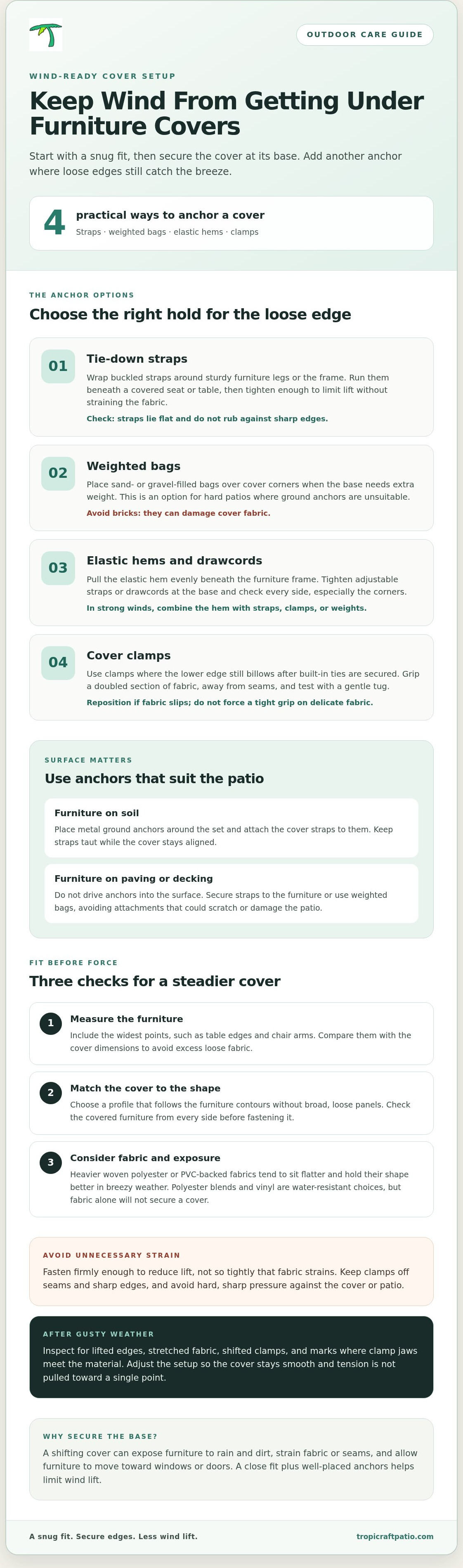
Cover clamps for additional wind protection
Use clamps when the cover’s lower edge still billows after you’ve secured its built-in ties. Place them where loose fabric lifts, such as along the bottom edge of a rectangular table cover. Clamps add grip at specific points, helping reduce flapping without replacing straps or a fitted hem. Choose a spot where a clamp can hold the fabric securely without pulling the cover out of alignment.
Attach each clamp to a doubled section of fabric, not a single stretched panel. The extra fold gives the clamp more material to grip and helps keep its pressure away from a seam. Before securing it, smooth out wrinkles and check that the cover still sits evenly over the furniture. A twisted edge can create a new gap for wind to catch.
Test each clamp with a gentle tug before leaving the cover in place. If the fabric slips, reposition the clamp along the hem or try another loose area. Don’t force a tight grip onto delicate fabric, a seam, or a sharp furniture edge. Too much pressure can strain the cover, while a loose clamp may let the fabric flap free.
Inspect the secured cover after gusty weather and adjust any clamp that has shifted. Look for lifted edges, stretched fabric, and marks where the clamp jaws meet the material. If the cover fits several furniture pieces, make sure the fabric remains smooth across each one instead of being pulled sharply toward a single clamp. This balanced setup helps limit movement while distributing tension.
For guidance on choosing outdoor furniture and covers for your space, talk with Tropicraft Patio.
Tropicraft Patio: Resin Wicker
Tropicraft Patio can help you choose outdoor furniture that complements your space and how you use it. If you’re reviewing your patio setup alongside a better-fitting cover, explore resin wicker, cast aluminum, and extruded aluminum styles. Thoughtfully chosen furniture brings comfort and a cohesive look to your outdoor retreat, while a properly fitted and secured cover remains essential in windy weather.
Consider your furniture’s shape before selecting a cover: broad arms, curved backs, and table legs affect how fabric drapes and where wind may catch it. Matching the cover to those contours makes it easier to secure the base neatly with straps or other suitable fasteners. Contact Tropicraft Patio or visit tropicraftpatio.com to explore outdoor furniture options.
Make your patio ready for changing weather
Let each season be an opportunity to shape your patio around the moments you want to enjoy there. A quiet morning retreat, an open-air meal, or an evening with friends may call for a different arrangement. Considering those uses ahead of time helps create an outdoor space that feels welcoming, considered, and ready to evolve with your routine.
For ideas that suit your home and the way you gather outdoors, contact Tropicraft Patio. A thoughtful next step can bring greater ease and enjoyment to the space you call your own.
Frequently Asked Questions
How do you secure outdoor furniture covers against wind?
First, arrange the furniture so covered pieces aren’t crowded together or pressed against a wall. This lets each cover sit in position and makes it easier to spot movement. If a storm is expected and the furniture is lightweight or easy to move, store it in a shed or garage rather than relying on the cover alone.
What are the best furniture cover tie-downs, straps, clips, and buckles?
Choose fasteners that suit the cover’s attachment points and the furniture’s frame. A buckle strap can work well when the frame offers a secure route beneath the furniture; a clamp can provide extra hold where the fabric needs it. Avoid improvised attachments that could scrape a finished frame or leave small pieces within reach of children or pets.
How to choose a properly fitted furniture cover to prevent wind lift?
Check the cover’s shape as well as its listed dimensions. A tall-backed lounge chair, for example, needs enough depth for the backrest without excess material around the seat. Also consider ease of use: a cover that’s awkward to position may be left partly unsecured. Review the furniture’s widest points and outline before selecting a style.
Do elastic hems or drawstrings keep furniture covers from blowing off?
Elastic hems and drawstrings can help keep a cover seated around the furniture, but inspect them for wear before use. Stretched elastic or a frayed drawstring may not hold evenly along the base. After fitting the cover, check that the closure hasn’t snagged on a chair foot or become trapped beneath a furniture leg.
Are cover weights or sandbags effective for securing outdoor furniture covers?
Weighted bags can add hold at the cover’s lower edge, particularly on freestanding pieces without convenient tie points. Keep each weight on stable ground and position it where it won’t be kicked or caught underfoot along a walkway. If the patio is exposed, moving the furniture to a more sheltered spot can reduce reliance on added weight.

Comments