


Matching New Furniture to an Existing Set Without Exact Matches
A perfectly matched room can feel less inviting than one with thoughtful contrast. Furniture doesn’t need to match exactly: a useful starting point is to let about 80% of the room lean toward one style, with the remaining 20% adding contrast. Matching new furniture to an existing set is about creating a visual connection, not finding identical pieces.
It’s natural to want new additions to blend with furniture you already love. Create harmony by repeating colors, shapes, or finishes while introducing a different texture or silhouette. This guide explains when matching pieces make sense, how contrast adds depth, and how to build a cohesive color palette that feels considered, comfortable, and personal.
Table of Contents
1. Do My Furniture Pieces Really Have to Match?
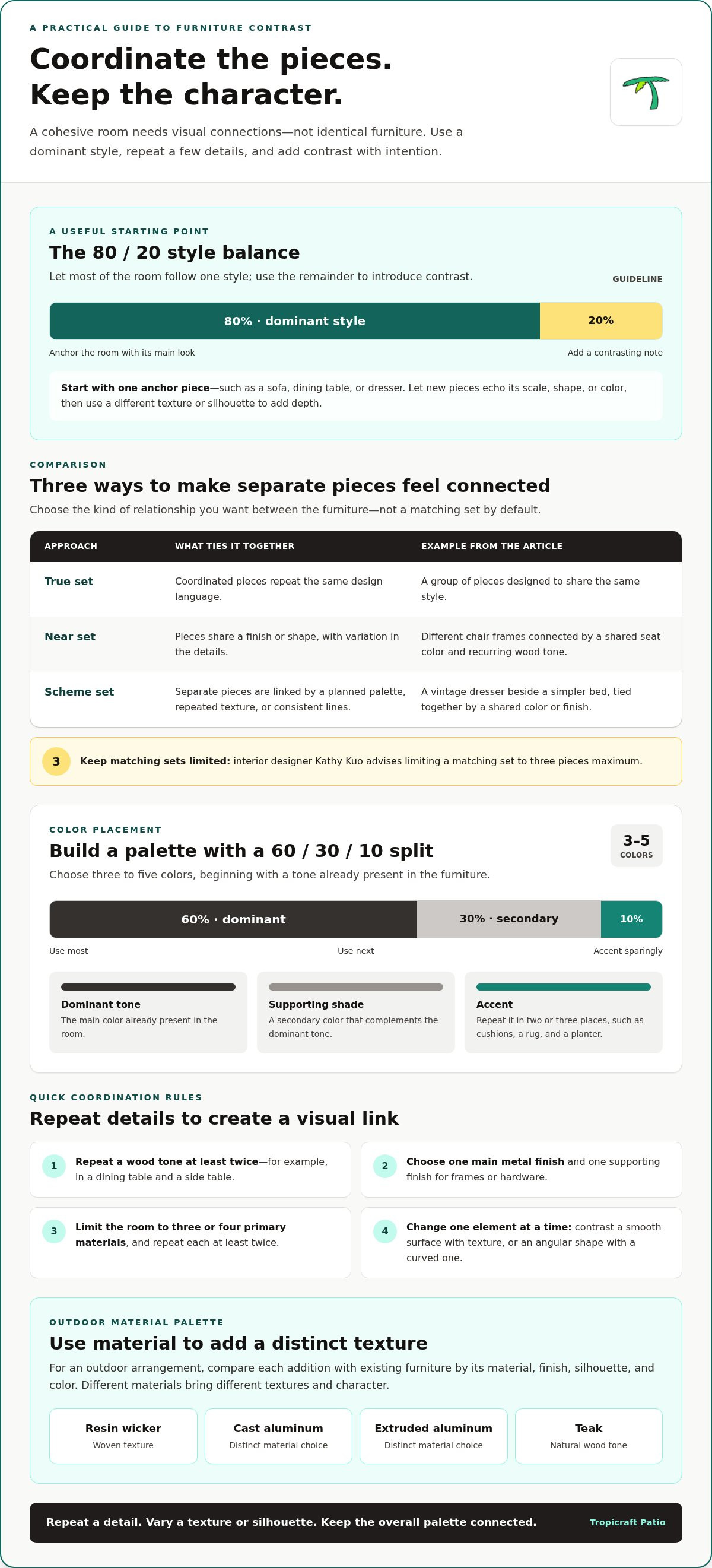
No. A cohesive look comes from relationships between pieces, not identical finishes. Start with one anchor, such as a living room sofa, dining table, or bedroom dresser. Then choose new furniture that echoes its scale, shape, or color. An 80/20 balance is a useful guide: let about 80% of the room follow one style, and use the remaining 20% for contrast.
Keep the connection visible by repeating details. For example, echo a warm wood tone in a coffee table and side tables, or carry one metal finish through a lamp and an accessory. Interior designer Kathy Kuo advises limiting a matching set to three pieces maximum. A vintage dresser can sit comfortably beside a simpler bed when a shared color or finish ties them together.
Matching new furniture to an existing set doesn’t require buying from one collection. Choose two style words, such as “classic” and “relaxed,” then use them to assess shape, material, and finish. In a living room, a traditional sofa can pair with accent chairs in different shapes. If a set feels too uniform, move one or two pieces, such as bedside tables, into another room.
For discontinued furniture collections, first look for the manufacturer and model name on a label, receipt, or original paperwork. Search those details alongside the piece type, such as “dining chair,” and compare the finish and dimensions in any listing you find. If an exact piece proves elusive, repeat a detail from the set instead. A woven style, for instance, can provide a useful reference when comparing rattan wicker furniture with your existing patio pieces.
2. Why full matching furniture sets can make rooms feel flat
Uniformity can flatten a room because every surface asks for the same attention. Matching chairs, tables, and upholstery create few visual pauses. During the 1990s and early 2000s, matching furniture sets were a common default. That consistency can read as dated when every piece repeats the same material, color, and silhouette. Contrast adds rhythm: pair a smooth table with textured upholstery, or set an angular chair beside a curved accent.
The distinction isn’t simply matched versus mismatched. A true set repeats the same design language across coordinated pieces. A near set shares a finish or shape but varies in detail. A scheme set brings separate furniture together through a planned palette, repeated texture, or consistent lines. For example, chairs with different frames can feel connected through a shared seat color and recurring wood tone.
To break up a full set, keep its strongest piece in place and relocate one supporting item. Matching nightstands can be separated, with one moved beside a reading chair in another room. This creates variation without discarding useful furniture. Repeat a small detail, such as a metal finish, elsewhere so the change feels intentional rather than accidental.
Try a quick edit: identify the repeated material, introduce a contrasting texture, then check the visual balance from the doorway. If every chair, table, and upholstered surface still looks alike, change one shape or finish. A balanced mix feels collected, while recurring colors preserve continuity. For help exploring an outdoor arrangement, use Tropicraft Patio's contact page to start the conversation.
3. Creating a cohesive color palette without exact matches
Choose three to five colors for the room, starting with a tone already present in your furniture. A living area might combine warm wood, soft neutral upholstery, and a muted green accent. A 60/30/10 split can guide placement: use the dominant color most, a secondary shade next, and the accent sparingly. This creates contrast without making the palette feel scattered.
Set simple rules before choosing new pieces. Repeat one wood tone at least twice, such as in a dining table and side table. Choose one main metal finish and one supporting finish for frames or hardware. Limit the room to three or four primary materials, and repeat each at least twice. These visual links help matching furniture sets and individual additions feel related.
Color-matching decisions depend on a piece’s size, material, surface condition, finish, and the work involved. Adjusting a small area differs from refinishing an entire table, so the scope and desired finish shape the cost. To coordinate colors, repeat an accent in two or three places, such as cushions, a rug, and a planter. Avoid introducing a new strong color on every large piece.
Check the layout as well as the palette. In a dining space, leave clear routes around chairs, and avoid placing every dark piece together. Step back from the entrance to see whether color and visual weight feel balanced. Matching new furniture to an existing set works best when one repeated element connects the pieces. Discuss your outdoor furniture palette as you refine the overall arrangement.
Tropicraft Patio: Resin Wicker
Tropicraft Patio can help you shape an outdoor setting around the pieces you already enjoy. When a new chair or table needs to coordinate without being an exact match, compare its material, finish, silhouette, and color with your existing furniture. Resin wicker, cast aluminum, and extruded aluminum offer distinct design possibilities. Thoughtful choices in materials and craftsmanship can support durability and long-term value outdoors.
Consider how weather exposure and ongoing care relate to the materials in your arrangement. Choose individual pieces to extend your current layout, or explore a complete set for a new area. A shared color or complementary material can connect different styles while preserving the character of your existing set.
For help choosing pieces that suit your space and design direction, contact Tropicraft Patio.
Shape an Outdoor Space That Feels Like Yours
Let your next addition reflect how you want to spend time outdoors, whether that means lingering over dinner or creating a quiet place to unwind. Matching new furniture to an existing set can refine the atmosphere, not just fill an empty space. Consider the feel you want, then choose pieces that support it with considered materials and lasting comfort.
Tropicraft Patio offers resin wicker, cast aluminum, and extruded aluminum, giving you distinct materials to consider as you shape your outdoor setting. The right choice depends on the character of your existing pieces and the experience you want your patio to invite.
Contact Tropicraft Patio to explore your options, and take the next step toward an outdoor retreat that feels welcoming and unmistakably yours.
Frequently Asked Questions
Do My Furniture Pieces Really Have to Match?
No, exact matches aren’t necessary for a comfortable, coordinated space. Keep a pair of chairs you use often and introduce a side table in a different material, for example. Echo its finish in a lantern or planter to make the addition feel intentional. Before replacing a whole grouping, try rearranging the pieces you already have.
How to identify the wood type, finish, and style of existing furniture
Look for a maker’s label or model information underneath the piece, then inspect its grain, color, sheen, and shape. Photograph the furniture in natural light, including close-ups of joints and hardware. Stains and clear coatings can change how wood appears, so note the finish separately from the likely wood type. Record these details before shopping.
Should new furniture match existing furniture exactly or coordinate?
Coordination usually gives you more flexibility than an exact match. When matching new furniture to an existing set, compare the new piece’s overall shape, visual weight, and undertone with the furniture you own. A similar tone can connect different finishes, while a contrasting silhouette adds character. Exact matches make sense when you specifically want symmetry.
How to match furniture scale and proportions to existing pieces
Compare measurements before choosing a piece, then picture its footprint beside the existing furniture. A coffee table should be about two-thirds the length of the sofa, and walking paths should have at least 30 inches of clearance. For dining furniture, check that chair seats tuck beneath the table and leave comfortable room for people to sit and move.
What are common mistakes when adding furniture to an existing set?
Common missteps include choosing by color alone, overlooking scale, and adding several competing finishes at once. Consider the whole arrangement, including movement and how you’ll use each piece. If you’re comparing materials and styles for an outdoor space in Ardmore, Philadelphia, Ventnor, Margate, Stone Harbor, Avalon, King of Prussia, Cape May, or Villanova, explore Tropicraft Patio’s outdoor furniture as part of your planning.
Can furniture finishes be matched across different wood species?
Yes. Different wood pieces can coordinate through a repeated wood tone, even when they aren’t exact matches. Check the color and finish separately, since stains and clear coatings can affect how the wood appears.
Comments