


Outdoor glider benches for patios, porches, balconies, and gardens
The best outdoor glider benches balance the space you have, the look you want, and the weather they’ll face. They offer a back-and-forth glide without needing to suspend a large piece of furniture, and styles are available for one to three people. Match the bench’s scale and materials to its setting, then consider how much exposure it will have to sun, rain, and changing seasons.
Comfort and appearance matter, but so does choosing furniture suited to how you use your patio, porch, or garden. When considering outdoor glider benches for your outdoor space in Ardmore, Philadelphia, Ventnor, Margate, Stone Harbor, Avalon, King of Prussia, Cape May, or Villanova, assess the fit, materials, and care needs. Compare the design with your existing furniture and think about how much weather exposure the location receives.
Table of Contents
Choosing a bench for patios, porches, balconies, and gardens
Start with the setting, then assess how people will use it. Outdoor glider benches suit conversations and quiet pauses, with styles designed for one to three people. Unlike traditional rockers, they move back and forth on a gliding mechanism. That motion offers a porch-swing feel without suspending a large seat overhead.
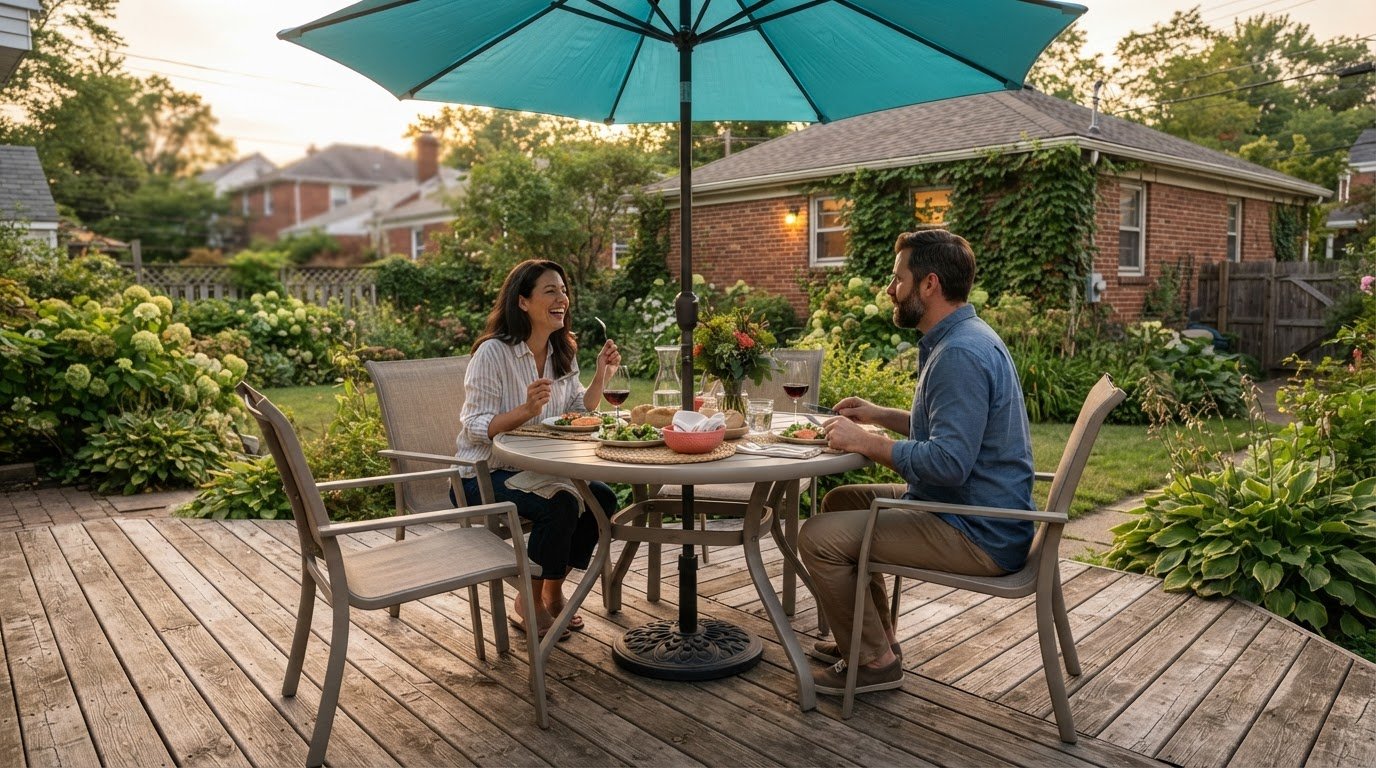
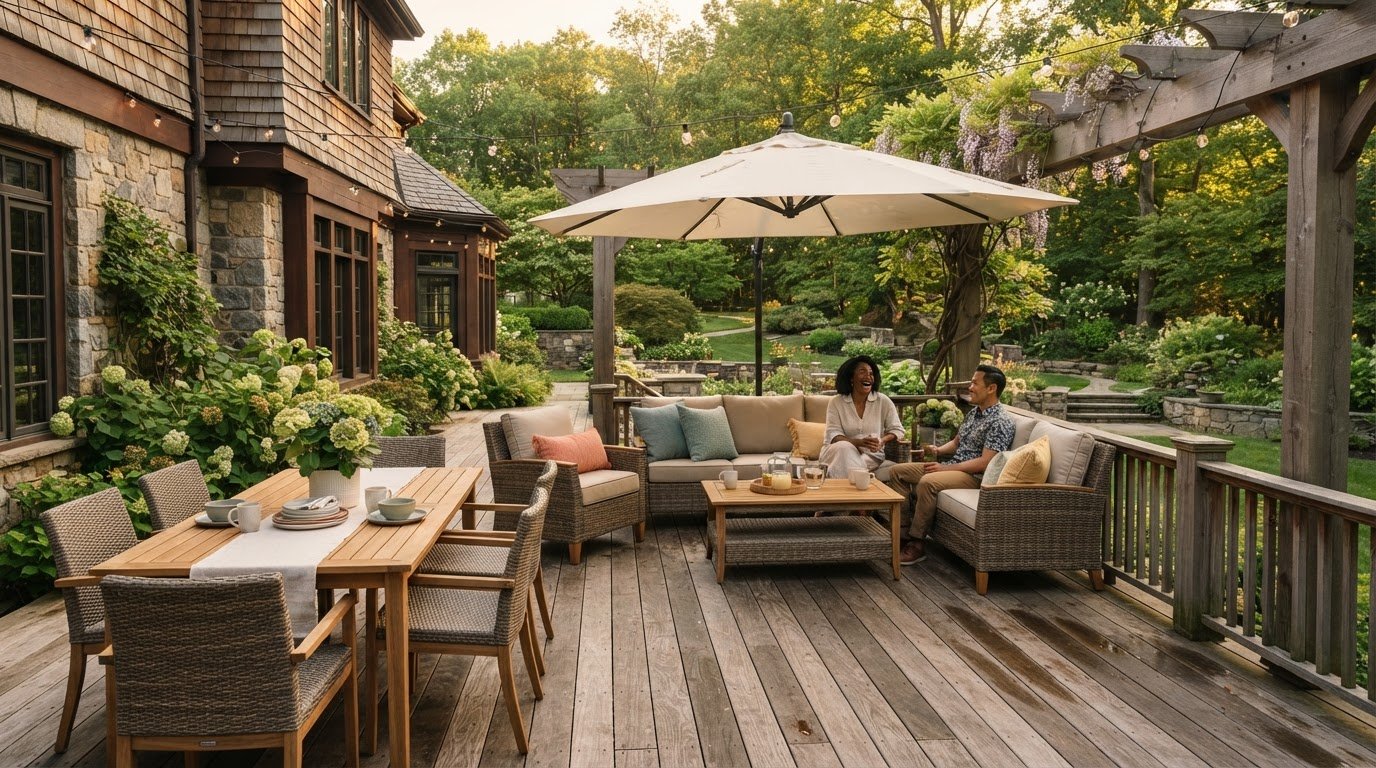
On a patio, position the bench so it complements the dining area without blocking chairs or walking routes. On a porch, account for doorways and railings, and consider the view from the seat. In a garden, frame a view or pathway while leaving clear space for the gliding motion. Each location calls for a different balance of access, scenery, and shared use.
Measure the location: Record the available width and depth, then compare them with the bench’s full dimensions.
Map the movement: Use removable tape to outline the footprint and observe the space as the seat glides.
Plan for access: Check door swings, steps, and routes around the bench before settling on placement.
Choose capacity: Match a one-person seat to a reading nook, or select a larger design for shared lounging.
On a balcony, prioritize a compact footprint and an unobstructed route to the door. A broad garden seat can anchor a generous corner, while a narrower porch option may preserve circulation. Compare listed dimensions rather than relying on appearance alone. For example, a Swing Chair is listed at 57.75 inches by 29.5 inches by 33.5 inches. Treat those measurements as a starting point, then consider the usable space around it.
Mesh, sling, wicker, wood, and HDPE designs
Compare materials by appearance, feel, and care needs. Wicker adds woven texture, while wood shows its natural grain. Sling creates a streamlined look, and poly lumber has a smooth, board-like appearance. Choose a finish and construction that suit your style and outdoor setting.
Mesh: Its open structure gives a light, airy look. Consider it for a contemporary balcony where visual simplicity matters.
Sling: Taut fabric creates a clean seat profile. Check how the seating feels and supports you before choosing.
Wicker: Woven strands add texture and a classic lounge character. Resin wicker offers that crafted appearance in an outdoor furniture material.
Wood: Grain and natural variation make each piece visually distinctive. Compare the finish with nearby decking or garden furniture.
HDPE: This material is formed into solid, lumber-like components. Its substantial appearance can suit a garden or traditional porch.
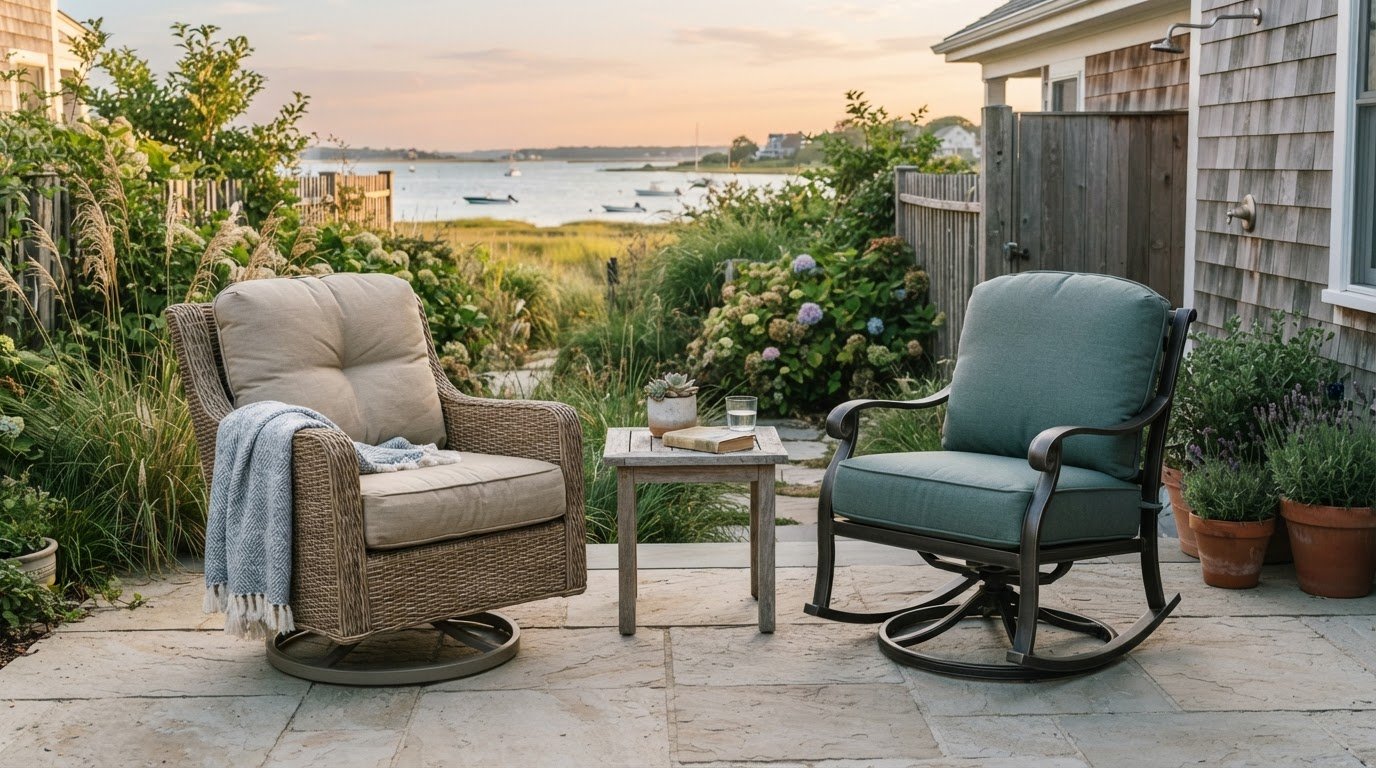
Look beyond the material name. For each glider, inspect the seat shape, back support, armrests, and frame construction. A woven back with a firm seat, for example, can give a different feel from an all-sling design. Pairing a material with the setting also helps: wicker can soften a stone patio, while wood can echo a garden’s natural details. Choose cushions only if their color and feel complement the frame.
Compare samples in daylight when possible; shade can change how colors read. For help considering material options for your outdoor space, discuss your furniture choices.
The fir-wood patio swing glider bench supports up to 350 lbs. That capacity is one practical detail to compare alongside the seat’s feel, frame, and finish when choosing among these materials. Consider whether the bench’s fir-wood construction suits the look you want for the patio or garden.
Outdoor glider bench materials and weather resistance
Choose materials by matching exposure, finish, and care to your setting. A covered porch shelters a bench differently from an open garden. Sun, rain, damp ground, and seasonal storage all affect how surfaces age. For outdoor glider benches, inspect the whole construction, not just the visible seat.
Wood brings natural grain, but its finish and upkeep shape its outdoor performance. Metal frames rely on their surface finish and sound joints; inspect seams and connection points. Resin wicker and HDPE create different looks, so check the frame beneath each weave or panel. Sling and mesh seats can dry readily when open, but their fabric and attachment points still need care.
Look at the finish: Check for consistent coverage, exposed edges, and damage-prone contact points.
Inspect the mechanism: Move the seat gently and look for smooth motion, secure connections, and rubbing parts.
Plan protection: Place the bench under shelter when practical, or use a fitted cover between uses.
Consider drainage: Choose a position where water won’t collect around the feet or moving components.
Follow the supplied assembly instructions and place the bench on a firm, level surface. Tighten fasteners as directed, keep fingers clear of moving joints, and test the glide before anyone sits down.
Before buying, check the base for stability and inspect the mechanism for pinch points or exposed moving parts. Make sure fasteners are secure and the seat moves smoothly without striking the frame.
For help comparing outdoor furniture materials and protection options, discuss your outdoor furniture needs.
Tropicraft Patio: Resin Wicker
Tropicraft Patio offers resin wicker, cast aluminum, and extruded aluminum outdoor furniture for spaces around Ardmore and Philadelphia. If woven texture suits your patio, explore its resin wicker outdoor furniture and consider how it will coordinate with your existing seating.
Compare materials and finishes with the rest of your outdoor furniture to create a cohesive look, whether you’re furnishing a city patio in Philadelphia or a garden retreat near Ardmore.
Contact Tropicraft Patio to discuss your outdoor furniture choices.
Make Your Outdoor Space Feel Like Yours
Let the setting guide your final choice. A glider should feel like a natural part of the way you spend time outdoors, not simply another piece of furniture. Picture a quiet reading moment, an evening conversation, or a pause in the garden, then choose the design that supports that experience and suits your space.
Before deciding, review your measurements and consider how the bench will fit alongside the rest of your outdoor arrangement. The right outdoor glider bench brings comfort and visual harmony to your space, creating a welcoming place to relax.
When you’re ready to shape that retreat, contact Tropicraft Patio to explore your options. Your next quiet moment outdoors can begin with a thoughtful choice.
Frequently Asked Questions
What is an outdoor glider bench and how does it work?
An outdoor glider bench has a seat connected to a base by a linkage that guides its movement. A seated person starts the motion with a gentle push, and the connected parts control the seat’s path. Unlike a bench with curved rocker rails, the base stays planted while the seat moves.
What materials are best for outdoor glider benches?
The right choice depends on which features matter most to you. Consider the frame and seat separately: you might prefer a metal frame with woven seating or a coordinated wood design. Compare each option with your existing furniture, and review its care instructions before deciding.
How do wood, metal, and poly lumber glider benches compare?
Compare the details, not just the material label. With wood, look at the grain and finish across the piece. For metal, assess the frame shape and finish. For poly lumber, examine how the boards meet at corners and armrests. These details help you judge the overall design.
Are outdoor glider benches weather-resistant and suitable for year-round use?
Year-round use depends on the care guidance for the specific bench and the conditions around it. Before leaving a bench outdoors through changing seasons, review the recommended cleaning and storage routine. Keep the area around the base clear, and periodically inspect the moving connections for debris or loose fasteners.
How much do outdoor glider benches cost?
Pricing for outdoor glider benches varies based on materials, craftsmanship, and brand. At Tropicraft Patio, you can find simple entry-level models starting around a couple of hundred dollars, while larger, premium hardwood or heavy-duty poly lumber benches can cost upwards of several hundred to over a thousand dollars.
Comments